South Australia, , Odds & Ends
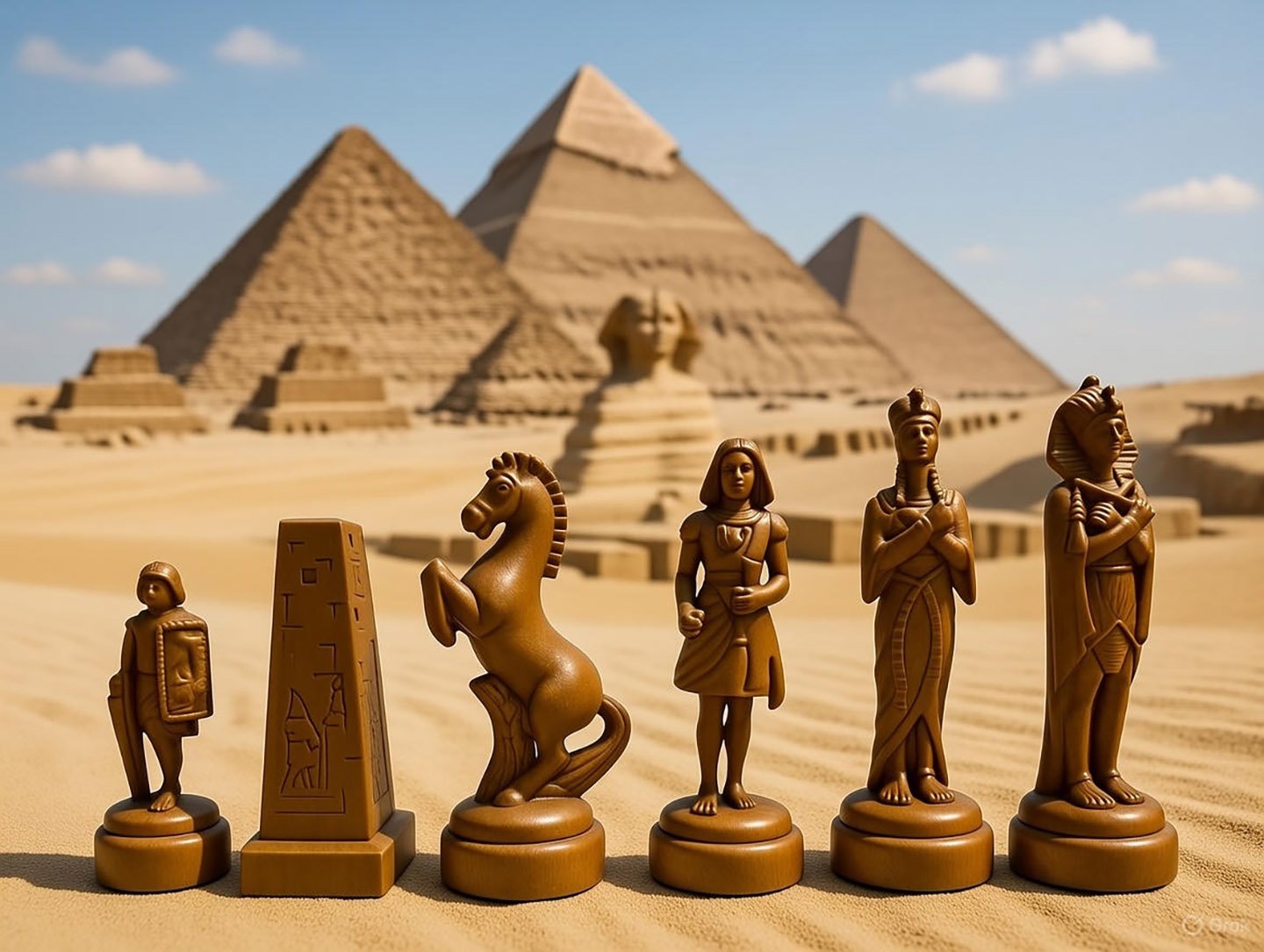
Lot #1028. Vintage Anri Nofretete Egyptian Chessmen
$ 99.00
Please call 03 9578 8658 or email [email protected] for enquiries
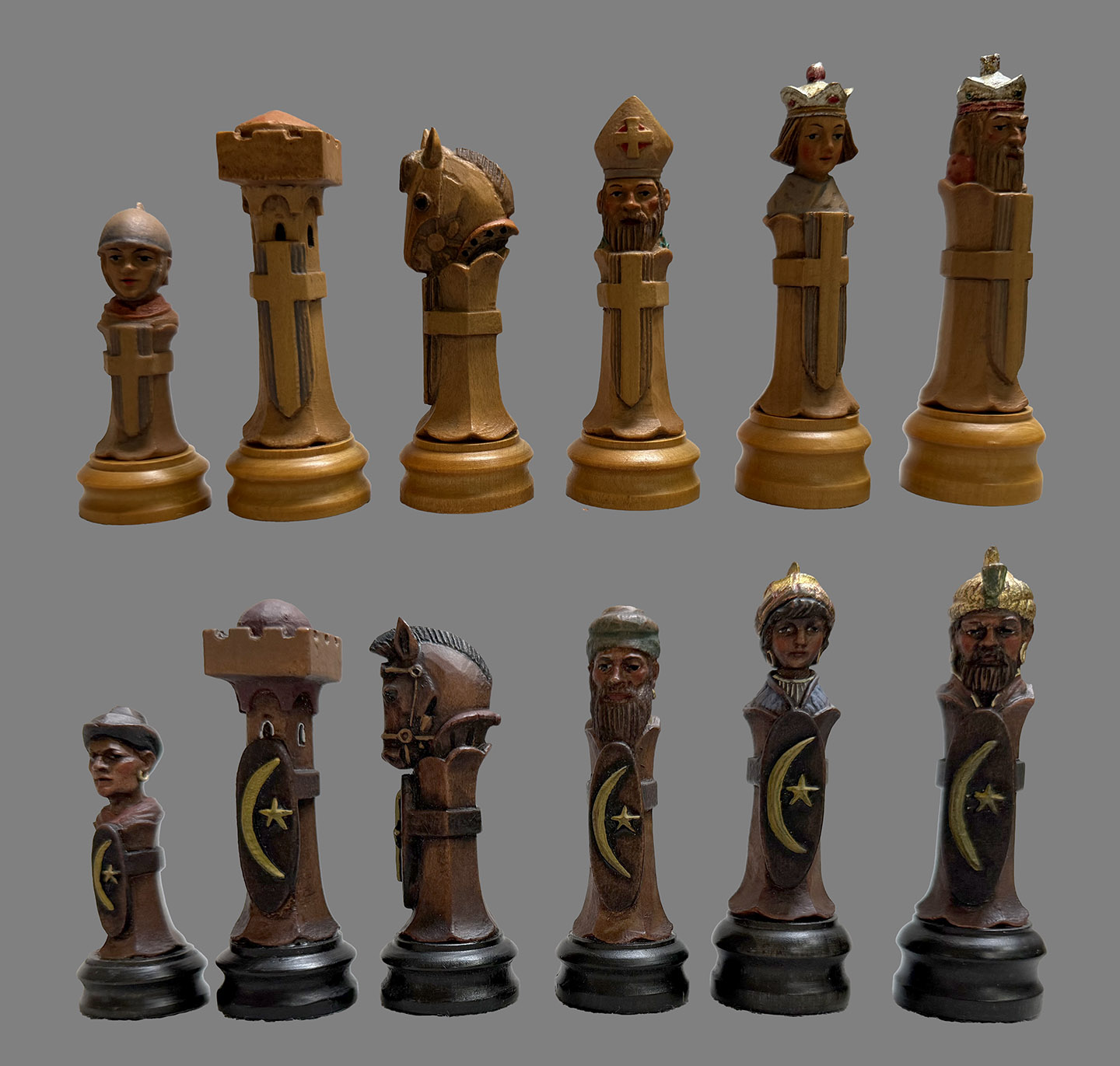
Description Anri Nofretete Egyptian Chessmen. Offered here is a set of the beautifully hand-carved and hand-painted figural Anri Nofretete Chessmen, housed in a display case with two compartmented trays to secure the chessmen. The set is Anri Design #71811. This version of the Anri Nefertiti design is far less common than the Italian version. The Anri Nofretete and Anri Nefertiti chessmen refer to the same hand-carved, hand-painted wooden chess set produced by the Italian company Anri (based in the German-speaking Val Gardena region of South Tyrol) from 1964 to 1984. “Nofretete” is simply the German spelling of “Nefertiti,” and the set is marketed under that name in German-speaking contexts This vintage set features an Egyptian motif, with the queen modeled after the famous bust of Nefertiti (the ancient Egyptian queen and wife of Akhenaten), the king after Akhenaten, bishops as advisors or servants, knights as rearing horses, rooks as obelisks with hieroglyphs, and pawns as soldiers or attendants. Pieces are crafted from alpine maple or walnut, lightly weighted at the bases with felt pads, gilded in gold and silver. The King stands 4-5/8 inches tall. The chess pieces rest atop red felt base pads. These statuesque Anri Nofretete Egyptian Chessmen reflect a distinct Egyptian motif. Each of the Anri Nefertiti chessmen is magnificently hand-carved and painted. The pieces of the Anri Nofretete Chess set are lightly weighted. The chessmen and the original fitted storage box are in excellent condition. The Anri chessboard shown is not included but can be purchased separately here. To see our extensive selection of antique and contemporary chessboards, click here. Any perceived differences between the more common Anri Nefertiti and the German Nofretete likely stem from production variations over its 20-year run, aging, lighting in the images, or minor batch differences in staining/painting—some sets appear more vividly colored or gilded, while others look more natural or monochromatic, but the core sculptural design remains consistent across all examples. Some History The Queen in this chess set is Nefertiti. Neferneferuaten Nefertiti (c. 1370 – c. 1330 BC) was an Egyptian queen and the Great Royal Wife (chief consort) of Akhenaten, an Egyptian Pharaoh. Nefertiti and her husband started a religious revolution, in which they worshiped one god only, Aten, or the sun disc. With her husband, she reigned at what was arguably the wealthiest period of Ancient Egyptian history. Some scholars believe that Nefertiti ruled briefly as Neferneferuaten after her husband’s death and before the accession of Tutankhamun. Nefertiti had many titles including Hereditary Princess; Great of Praises; Lady of Grace, Sweet of Love; Lady of The Two Lands; Main King’s Wife – his beloved; Great King’s, Lady of all Women; and Mistress of Upper and Lower Egypt. She was made famous by her bust, now in Berlin’s Neues Museum. The bust is one of the most copied works of ancient Egypt. It was attributed to the sculptor Thutmose, and it was found in his workshop. For further information on Nefertiti, Click here. The King in the set is Akhenaten, who was originally known as Amenhotep IV. He was an ancient Egyptian pharaoh of the 18th Dynasty who ruled for 17 years and died perhaps in 1336 BC or 1334 BC. He is noted for abandoning traditional Egyptian polytheism and introducing monotheistic worship centered on the solar deity Aten. Akhenaten was a younger son of Amenhotep III. Modern interest in Akhenaten and his queen Nefertiti comes partly from his connection with Tutankhamun (even though Tutankhamun’s mother was not Nefertiti, but a woman named by archaeologists The Younger Lady) and partly from ongoing interest in the religion he attempted to establish. There is some controversy around whether Amenhotep IV succeeded to the throne on the death of his father Amenhotep III or whether there was a co-regency lasting as long as 12 years according to some Egyptologists. For further information on Akhenaten, Click here. The Bishops in the set are modeled as typical religious advisors or maybe the King’s consorts or the Queen’s servants. Knights are represented by rearing stallions. horseback. The Rooks are obelisk-like structures with what appears to be Ancient Egyptian symbolism on their sides, although a true obelisk would likely have a pointed top. Obelisks were thought to have been erected to commemorate a person, or to honor the gods. About Anri In the late 19th century Alois Riffeser traveled to the major European cities to sell the wood carved figurines and toys which were bought from the farmers of the Gröden Valley located in the Dolomite region of the Alps. This area in South Tyrol was part of Austria-Hungary at the time until being annexed to Italy in 1919. In 1912 Josef Anton Riffeser founded the ANRI Company, which he named using the first two letters of his first and last name. After World War I, where he was in a prisoner of war camp in Siberia, he formulated his plan for a woodcarving company. He created his own models which he distributed successfully, mainly in the Alpine region. When Anton Adolf Riffeser took over in 1945, he transformed the ANRI company, adopting a more industrial model which allowed for better quality control and distribution to new markets. He was followed by Ernst Riffeser who was able to enlist the services of many well known artists including Juan Ferràndiz, Sarah Kay and others. The ANRI company today is run by Thomas Riffeser, and still remains in the same family. The wood art tradition has a long history in Val Gardena, Italy. The tradition of woodcarving dates back to the XVII century, when farmers started producing wood toys and utensils during the long winter season. The peasants than used to sell the items at spring markets. Part of the autonomous region Alto Adige/Southern Tyrol in Italy, the Val Gardena is known for its ancient romantic language, its skiing facilities – and its old tradition of woodcarving. The ANRI company’s chess sets from the 1950s through the 1990s were produced in this region and have gained collectors status, thanks to their unparalleled quality. The Anri workshops are renowned all over the world because the wonderful wooden sculptures and statues made by the famous local sculptors and carvers.
Related products
-
-
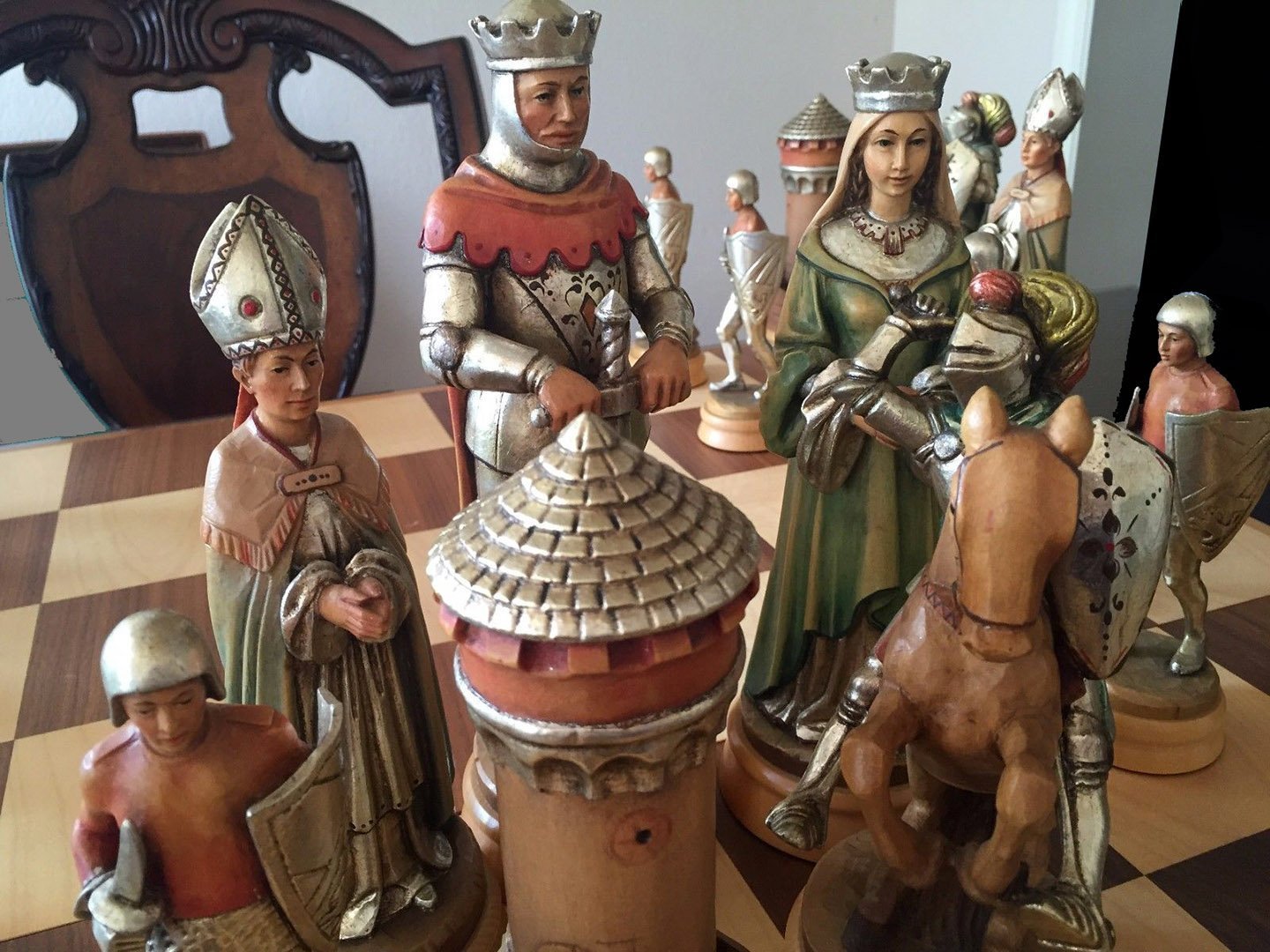 Accessories Lot #758. Anri Montsalvat Renaissance Chess Pieces $ 97.21 Add to cart This product has multiple variants. The options may be chosen on the product page
 -
-
-